Meme Coin Trading, Lessons From a Pro Challenge
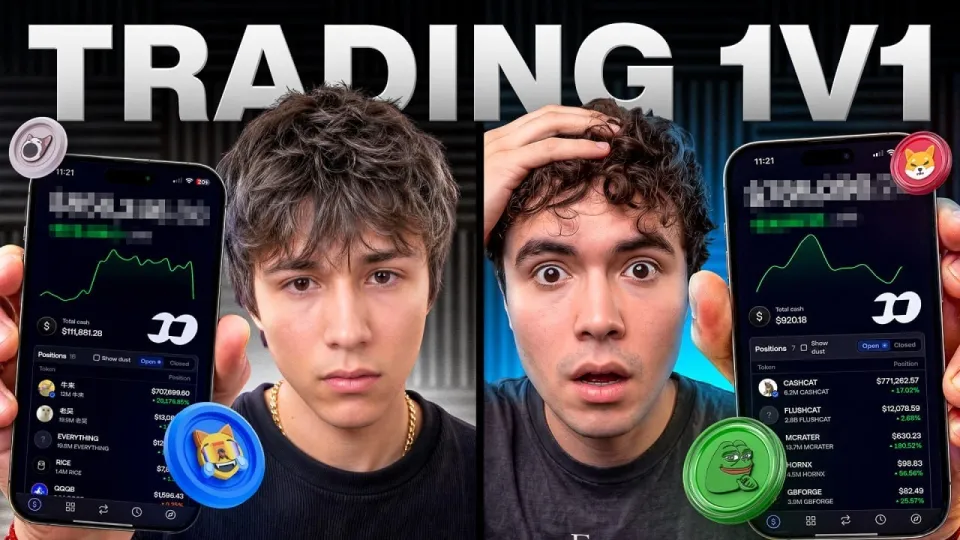
Video: I Challenged A Pro Memecoin Trader (Who Won?)
Need articles like this for your video? They help promote it on YouTube and Google — order them in the Telegram bot @sat_sit_bot. It writes articles around your video, embeds the video and publishes them on popular niche websites (no ads). Try it free: 50 articles on us.
Key takeaways
- The insentos challenge format pairs a host with a guest pro trader who explains his thought process live while trading.
- Most of the action in the video happens on Solana memecoins, with Axiom as the trading terminal and FOMO as the community/leaderboard layer.
- Viewers repeatedly ask for beginner-friendly breakdowns, so the practical value is in entry logic, exits and position sizing rather than picks.
- The recurring skeptical comment: streamed challenges often end in losses, which makes memecoin trading look closer to gambling than investing.
- A common request in the comments is a smaller-capital challenge, such as turning $50 into $1,000, to show realistic scaling.
Meme coin trading is speculative buying and selling of tokens launched around internet jokes, communities and trends, usually on Solana or Ethereum, where price moves are driven by attention rather than cash flow. In the insentos video «I Challenged A Pro Memecoin Trader (Who Won?)», the host trades live against an experienced guest who narrates his decisions in real time, and the useful takeaway is the process, not the tickers. If you want to follow along with the same setup, the creator points viewers to FOMO, the platform he uses for registration and community access.
What the meme coin challenge actually shows
The format is simple: two traders, one live session, and a running commentary on why each position is opened or closed. The guest is the more experienced operator, and viewers noticed that he kept explaining his reasoning mid-trade instead of going silent — that is the part worth copying. A meme coin is a token with no revenue, no product and often no team doxxing; its price is a function of liquidity, narrative and how fast holders rotate out. Because of that, the skill being tested in a challenge like this is not prediction but execution: how quickly you size a position, where you place your exit, and how you behave after a loss.
The mechanics behind a Solana memecoin trade
Solana memecoins dominate this style of trading because launch and execution costs are low and block times are short. A typical round trip looks like this:
- A token launches through a fair-launch pad or a bonding curve, and early buyers get the cheapest fills.
- Liquidity is thin, so a modest buy moves price several percent — this is slippage, and it cuts both ways.
- Traders watch holder count, volume acceleration and social chatter to judge whether the narrative is spreading.
- Exits happen in tranches: sell part on the first spike, keep a runner only if volume holds.
- Anyone still holding when liquidity drains discovers that a paper gain is not a realized one.
The terminal matters here. The video's description links to Axiom (https://axiom.trade/), a trading interface built for fast memecoin execution with charts, wallet tracking and one-click buys. Tools like this compress the time between seeing a setup and acting on it, which is exactly the edge being demonstrated in the challenge — and exactly the risk for anyone who clicks before thinking.
Position sizing and risk rules that survive live trading
Risk control is what separates a narrated challenge from a casino session. Memecoins can drop 80–90% within minutes when the first wave of sellers arrives, so the only defense is deciding your maximum loss before you enter. Practical rules that fit this style of scalping:
- Cap any single memecoin position at a small fixed percentage of your trading stack, so a total loss is survivable.
- Predefine the invalidation level — the price at which the thesis is simply wrong — and exit there without renegotiating.
- Scale out on strength rather than hoping for a single perfect top; partial profits remove the emotional pressure to hold.
- Track fees and priority tips, which on Solana are small per trade but compound quickly for a scalper.
- Stop for the session after a set number of losses; tilt is the most expensive variable in this market.
These are unglamorous rules, and they are the reason an experienced trader can sit through a livestream and still finish roughly flat while a beginner in the same tokens gets wiped out.
Common questions from new meme coin traders
Beginners watching this kind of content tend to raise the same doubts, and they are worth answering directly. The most frequent one is whether the trades shown are even replicable: in a live session the host reacts to a chart in seconds, while a viewer sees the same chart minutes later, after price has already moved. That gap is real, and it is why copying entries is far less useful than copying the decision framework — when to size up, when to cut, when to do nothing.
The second recurring theme is capital. Several viewers asked for a small-stakes challenge, something like turning $50 into $1,000, because the amounts used on stream feel abstract. A smaller account changes the math: fees take a bigger bite, a single bad fill hurts proportionally more, and the discipline of not over-leveraging becomes the whole game. The third theme is access — people notice that communities and groups are talked about constantly but are hard to actually join, which is part of why the creator links a public entry point rather than a private one.
Why streamed challenges often end in losses
The honest observation from the audience is that these videos frequently finish red, and that is not a flaw in the format — it is the format telling the truth. Memecoin trading has a negative expected value for most participants once fees, slippage and the occasional rug are counted, and a single streamed hour is a small, noisy sample. Traders with large followings also face conditions retail does not: their entries get front-run, their exits move the chart, and their results are not representative of a quiet account trading size.
Treat the challenge as a demonstration of technique under pressure. Watch how the guest reacts when a position goes against him, how quickly he accepts a small loss, and how he resists adding to a loser. Those behaviors transfer to any account size; the specific tokens do not.
Useful links
- FOMO — registration and community access used by the host
- Axiom — the trading terminal shown for memecoin execution
- insentos on X
- insentos on Instagram
- insentos on TikTok
Final takeaway
The value of this challenge is the narration: an experienced meme coin trader explaining entries, exits and risk while the chart moves, which is closer to real trading than any curated highlight reel. Copy the process — fixed position sizes, predefined invalidation, partial exits — and ignore the temptation to mirror individual buys after the fact. The insentos channel built the session around that idea, and the audience response suggests the format is more instructive than a list of picks. If you want to test the workflow yourself, start through the FOMO registration link and keep your first positions small enough that a loss teaches you something instead of ending the experiment.
Source: I Challenged A Pro Memecoin Trader (Who Won?) · Markdown version
Questions & answers
Is meme coin trading profitable for beginners?
For most beginners it is not, because fees, slippage and sudden liquidity exits eat into gains, and the market is driven by attention rather than fundamentals. Profitability comes from strict position sizing and fast exits, not from picking the right token. Treat early trades as tuition and keep size small enough that a total loss does not matter.
What tools do traders use for Solana memecoins?
The video points to Axiom as the execution terminal, which combines charts, wallet tracking and fast order entry for Solana tokens. The host also links FOMO for registration and community access. Any tool only speeds up execution — it does not replace a predefined exit plan.
Why do streamed trading challenges usually end in losses?
A single session is a tiny sample in a market with negative expected value for most participants, so a red result is statistically normal. Streamers also face front-running and price impact that retail traders do not. The instructive part is how losses are handled, not the final number.
How much capital do you need to start trading memecoins?
You can start with a small amount, but tiny accounts are hit hardest by fees and priority tips, which is why viewers ask for $50-to-$1,000 style challenges. Whatever the size, cap each position at a fixed small percentage of your stack and stop for the day after a set number of losses.